Why a bear
Berlin’s animal.
Berlin’s sandwich.
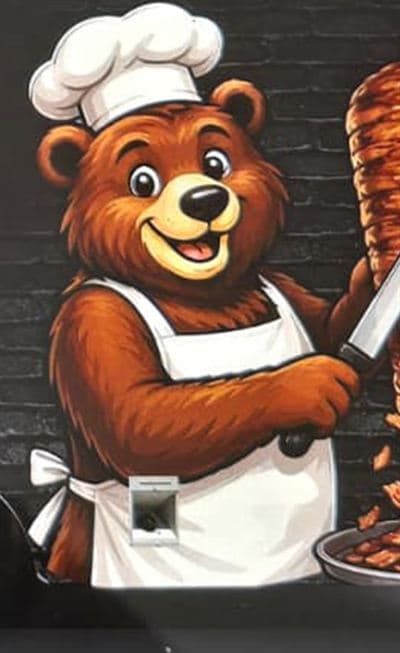
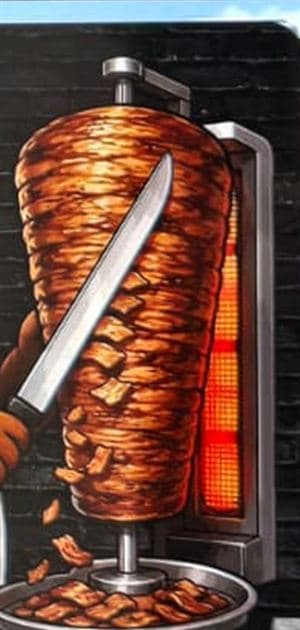
The bear has stood on Berlin’s coat of arms for eight hundred years. The döner is barely fifty years old there. Both are Berlin.
Where the döner actually comes from
Döner kebap is Turkish. The version the whole world now eats — carved meat in a folded flatbread with salad and sauce, handed to you to eat walking — was put together in Berlin in the 1970s by Turkish workers who needed lunch to be portable. It spread from Kreuzberg to every corner of Germany, and it is now as Berlin as the gate on our crest.
What we do differently
Most döner in the States is built for the counter: pre-cooked, held warm, assembled fast. That is not what Berlin tastes like.
- The spit is stacked by hand every morning, then carved to order. Nothing is carved before you ask for it.
- The bread goes on the grill and gets pressed, so the outside crisps and the inside stays soft. Warm bread out of a bag is not the same thing.
- Three sauces, made in-house — Kräuter, Cocktail and Scharf — and you can have all three. In Berlin, that is the default, not an upgrade.
- Red cabbage. Small thing. It is the thing people who have eaten in Berlin notice first.
Halal
All our meat is halal. It is not a special order or a separate menu — it is simply what we buy, because it is what the dish has always been.
The two questions
At any Imbiss in Berlin you get asked two things before you have finished pointing: mit alles? and mit scharf? Everything on it, and make it hot. We ask them too. Say yes to both.